



Everything you need to know to mix, manage, and make the most of your watercolours.
Understanding how to use a palette is a key step in using watercolours. This guide walks you through the types of palettes, how to set one up, and essential mixing tips to get you painting with confidence.
What is a watercolour palette, exactly? This is the place where you can organise your colours, dilute them with water, and mix new shades before they hit your paper.

Your palette is more than a paint holder, it’s where the magic begins. With practice, you’ll learn how much water to use, how to mix clean colours, and how to make your palette work for your style. Be patient, experiment often, and don’t be afraid of a little mess, it’s all part of the process.
Types of palettes
Pan sets (pre-filled palettes)
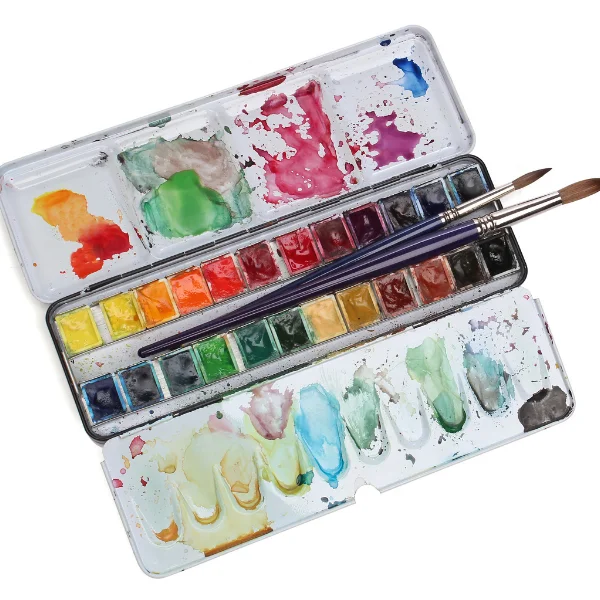
These come with dried blocks (pans) of paint in a compact box, usually with built-in mixing areas. They are best for beginners and travel sketching.
Beginners tip: Add a few drops of water to each pan before painting to soften the pigment.
Empty mixing palettes
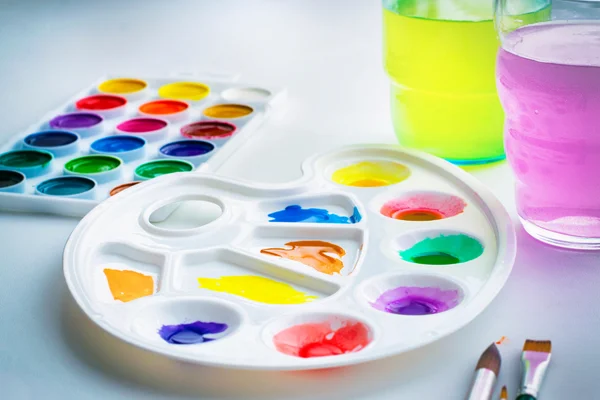
These are often ceramic, plastic or metal with plenty of space for mixing. Use with tube paints squeezed into wells. Empty mixing palettes are best for studio work and maintaining more control over your paints.
DIY palettes

Ice cube tray used for as a palette
You can use white ceramic plates, ice cube trays, or even upcycled packaging. Basically anything with a white, nonstaining surface. Best for budget-conscious artists or those on-the-go.
Setting up and using your palette
If you’re using a palette with wells (either pre-filled or from tubes), here’s how to get started:
- Arrange your colours in a logical order: Start with warm colours (reds, oranges), then cool colours (blues, greens), then neutrals and earth tones. Keep it consistent so you can instinctively reach for the right shade.
- Leave space for mixing: Always have at least one large mixing area, especially for washes or gradient blends.
- Label it (optional but handy): Especially helpful if you're using tube paints and want to remember the brand or pigment name.
- Use a clean brush and fresh water: Dirty water will muddy your colours, always rinse between shades.
If you're new to watercolour, don't stop here! Explore our other beginner-friendly guides to learn all you need to progress and develop your watercolour skills.
- Pick up paint gently: For pan sets, moisten first. For tubes, use a palette knife or scoop a small dot into the mixing area.
- Mix in the well or on the mixing plate: Start with a little paint, add water, and adjust until you reach the right consistency. More water = lighter wash, less water = stronger pigment
- Test before you paint: Try the colour on a scrap piece of the same paper. It often dries lighter than it looks wet.
- When you have finished: Wipe out your mixing area after each session with a damp cloth or tissue. You don’t need to clean out the dried paint wells, you can reuse them next time. Just re-wet and go!
Micro watercolour handmade plaette
Bonus tips for beginners
- Pre-mix your main colours before starting a painting to save time and stay consistent.
- Limit your palette to 5–6 colours to avoid over-mixing or muddy results.
- Use a spray bottle to lightly mist your palette before painting, it helps revive dried pans or tubes.

Comments
Login or register to add a comment
No comments