


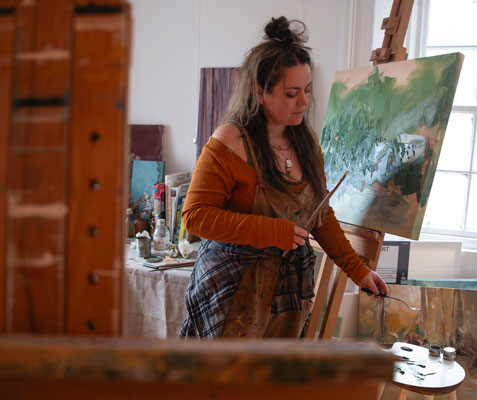
Charlotte in her studio
Discover the inspiration behind When Beasts Spoke, the debut solo exhibition by artist Charlotte Strawbridge. Blending expressive wildlife paintings with reflective writing from the animals’ perspective, the collection explores mindfulness, gratitude, self-love, and our deep connection to nature.
In this interview, Charlotte shares how years of painting British wildlife, studies of Scottish wildflowers, folklore, and personal growth shaped the exhibition. She also reflects on the challenges of creating through winter, and how the experience has opened exciting new creative directions.
What inspired the concept behind When Beasts Spoke?
When Beasts Spoke is a reflection on the quiet lessons nature offers, if we take the time to listen. Over the past few years, I’ve been creating illustrated thoughts inspired by the gentle wisdom of the wild. For this exhibition, I wanted to bring these together - paintings of our much-loved wildlife, paired with writing from the animal’s perspective. These pieces invite reflection on big ideas in an accessible way, from mindfulness and self-love to gratitude and the simple joys of the natural world.
How long did you prepare for this exhibition, and what did that preparation involve?
I had actually started some of the pieces before I knew they would become part of an exhibition. I was exploring a new direction for myself - playing with colour, scale, and style.
When the opportunity for a solo exhibition came up, the collection naturally evolved into When Beasts Spoke. From that point, it was about six months of focused work, though in many ways I’d been building towards it for years. I’d always wanted to bring my illustrated thoughts together in a book, so it felt like the perfect moment to both exhibit the work and release that alongside it.

Can you describe any research, sketching, or study that influenced the pieces in this show?
Over the years of painting British wildlife, each piece has deepened my understanding of the animals: their behaviour, their forms, and their presence. I’ve also explored symbolism and the idea of spirit animals, which has influenced the emotional and narrative side of the work.
On a more practical level, I wanted to develop my sense of context and background. I did a 30-day mini canvas project focused on Scottish wildflowers, using each piece like a sketchbook page. It became a space to experiment with mark-making, colour, and technique, and it really helped shape the direction of the larger works.

Painting Blackbird, oil on canvas, 50x50cm
How does this exhibition differ from your previous animal-themed works?
It feels more like an extension than a departure, but the scale of it changed my process. Usually, I complete a painting and let it go quite quickly. With nearly 30 pieces around me in the studio, I had the chance to reflect more deeply, seeing connections, noticing what I wanted to develop, and even revisiting and refining certain works. That added an extra layer of consideration that I don’t usually have when working more instinctively.
Are there particular paintings in the exhibition that hold special significance for you? Why?
In the Pines feels particularly significant. The pine marten itself came quite naturally, but it was the forest background that marked a real shift for me.
I had recently spent time sitting with the Impressionist work at the Scottish National Gallery, and I was full of ideas around looser, more expressive mark-making. In one studio session, it all seemed to come together quite effortlessly. It felt like a moment where something I’d been working towards finally clicked.

Tread Softly, oil on canvas, 60x60cm
The title When Beasts Spoke suggests narrative or personality, how do you convey “voice” in your paintings?
Of course, the “voice” often comes through the writing that accompanies each piece, but I usually write after the painting is finished, once I’ve spent time with it. The painting gives me a sense of what the animal might be expressing - whether that’s playfulness, stillness, or something more introspective - and the writing becomes a reflection of that. A playful otter might inspire thoughts on joy, while a still, watchful doe might become a meditation on presence. It’s a way of interpreting what I feel the animal is quietly communicating.
Did you experiment with any new techniques, materials, or approaches for this exhibition?
The wildflower study was a big part of that experimentation. It gave me space to loosen up, explore new marks, and become more confident with colour and background, which carried through into the final pieces.

Charlotte at work
How do you hope viewers respond emotionally or intellectually to these works?
I hope the work creates an emotional connection. There’s a sense that many of us long to feel more connected to nature, and I think that feeling is quite universal.
To me, the natural world always feels like it’s offering something: quiet guidance, if we’re open to it. I hope the paintings act as a gentle reminder to slow down, to notice, and to reconnect with ideas like presence, gratitude, and joy.
Were there any unexpected challenges during the creation or curation of the exhibition?
One unexpected challenge was simply the timing. I was painting through winter for a spring exhibition. The pull to hibernate, combined with a cold studio, definitely made motivation more difficult at times!

Woodland Waters, oil on canvas, 60x60cm
What personal meaning does this exhibition hold for you, and how do you feel sharing it with the public?
As it is my first solo exhibition, it means a great deal. It felt like a big step, one that came with moments of doubt, but also a lot of growth.
Over those six months, my practice developed more than I expected. There were so many conversations, reflections, and shifts in confidence. I’m incredibly proud of what came from it, and really grateful to be able to share that with others.
Did you draw inspiration from literature, mythology, or folklore in this exhibition?
Yes, particularly through my own spiritual interests and the folklore that surrounds them. I’ve always been drawn to the idea of spirit animals and the way animals are personified in different cultures.
There’s something timeless in those stories and symbols. Animals seem to carry meaning in a way that resonates deeply with us, and that has definitely influenced the work.

Charlotte painting
Looking forward, how do you see your work evolving after When Beasts Spoke?
I actually love that I don’t fully know yet. Finishing the collection has left me feeling more creative. It’s as though the process has opened something up. There are so many ideas forming, and hopefully momentum I can build on. Now it’s just a matter of working out which direction to follow next.
You can find out more information about the exhibition over at Made In Stirling
To find out more about Charlotte visit her website
You can follow Charlotte's work on Instagram, X, and Facebook

Comments
Login or register to add a comment
No comments