

Tutorial - My treatment of canvas before and after my painting
Welcome to the forum.
Here you can discuss all things art with like-minded artists, join regular painting challenges, ask questions, buy and sell art materials and much more.
Make sure you sign in or register to join the discussions.

This is a Studio member-only feature!
Join our Studio membership and save your favourite Painters Online content, from gallery artwork to step-by-step guides, to your own online mood boards. Create your go-to place for inspiration and learning. Plus, members can also enjoy a range of exciting features including monthly art videos and a digital magazine library.
If you are already a Studio member, simply login to your account.
Not a Studio member? Why not try our free 30-day trial - no commitment, no credit card required

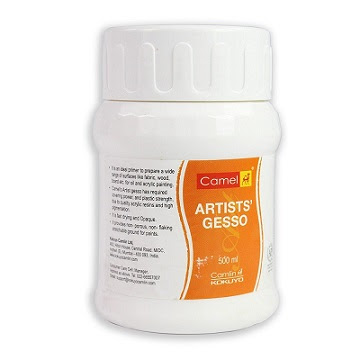
 I believe preparation of canvas is very important. I treat my canvas with primer first and then with gesso. I generally apply 2 coats of both the items so all of the canvas gets covered. I do not want one bit of canvas to be left out without the coat. These coatings will have immense effect on the painting.
 After the canvas dries for about 1 day after the gessor and primer application, I coat the canvas with one thick layer of oil paint. Then I allow the oil coat on the canvas to dry for about 2 days until it is completely dry. I allow it to dry in shadow, in the open space and then after it dries it is ready for painting.
I will wash the canvas with the water, dry the canvas and then I start with the painting. If you are an oil painting artist, it is very important to know how to prepare canvas for oil painting, how to create grid, how to varnish a painting and then how to preserve a painting.
What to do after the painting is over ?
After the canvas dries for about 1 day after the gessor and primer application, I coat the canvas with one thick layer of oil paint. Then I allow the oil coat on the canvas to dry for about 2 days until it is completely dry. I allow it to dry in shadow, in the open space and then after it dries it is ready for painting.
I will wash the canvas with the water, dry the canvas and then I start with the painting. If you are an oil painting artist, it is very important to know how to prepare canvas for oil painting, how to create grid, how to varnish a painting and then how to preserve a painting.
What to do after the painting is over ?
 I allow the painting to dry for about 3 -4 months after the painting is over. I live in India, so it is very hot between March and August, so allowing it to dry for 2 months is enough for me.
Then it is ready for varnish. Expert artists here allow painting to dry for six to seven months. They feel it is completely ready for varnish. Varnish is a tricky process. If it is done incorrectly, the painting may get damaged heavily. The colors on the painting gets removed and gets distributed everywhere if the painting if varnished before the painting is completely dry. Then it will be very difficult to correct the damage anywhere on the painting.
I allow the painting to dry for about 3 -4 months after the painting is over. I live in India, so it is very hot between March and August, so allowing it to dry for 2 months is enough for me.
Then it is ready for varnish. Expert artists here allow painting to dry for six to seven months. They feel it is completely ready for varnish. Varnish is a tricky process. If it is done incorrectly, the painting may get damaged heavily. The colors on the painting gets removed and gets distributed everywhere if the painting if varnished before the painting is completely dry. Then it will be very difficult to correct the damage anywhere on the painting.
 If you have used the technique glazing or if you have used too much oil in the painting, it is safe to dry the painting for a minimum of 6 months.


I have some problems with this as a process, mostly concerning the "thick layer of oil paint" after you've applied a primer and acrylic primer (called erroneously "gesso", but that's the manufacturer's error, and nearly all of them do it, not just Camel brand: it isn't gesso, but it is primer). If you paint thick oil over the priming - and then wash the canvas, what is the purpose of either operation? Following this advice could lead to people using an oil-rich (and thus slow-drying) layer on top of which leaner (i.e. less oil-rich) colours are applied. This is unlikely to age well it's almost bound to crack. If you're suggesting using an oil ground, it should preferably be a lead-based Foundation White - i.e. not just any oil paint. There would be no good reason to apply thickly, either. I know some people use the Bob Ross/William Alexander method of painting into a layer of thinned Titanium White as an alla prima approach - but though there's not an obvious disadvantage to doing that when the paint is still wet, at least it shouldn't cause problems (provided it's not slick with oil) - but there's not really much of a good reason to do it, and that isn't priming, anyway. Another method, and there are many, is to seal the board or canvas with shellac, and then apply priming - of oil, or acrylic primer ("gesso") over that: or even shellac > "gesso"/acrylic primer > oil primer. When you say wash the canvas - how would you do that? I don't understand why you think that would be necessary, or even helpful. I'm sure you don't mean you plunge it into the washing machine, and maybe a gentle cleaning with distilled water on a cloth would be useful, particularly in dusty, dirty, or just hot and insect-attracting climates. You might be a bit more specific though, or we're guessing at what you really mean. Many of us buy canvas or boards which are ready-primed with acrylic - or Ampersand boards - or a variety of others, and just paint on them. For most of us, this is safe enough, but you'd always want to buy the best you can get, and not cheap canvas or boards from stationery chains. You're presumably starting with raw canvas and then preparing it, though - I'm not at all sure that your method is the best way of doing so. Perhaps take a look at the Natural Pigments website, or buy Virgil Elliott's Traditional Oil Paint book and see how their recommendations compare with yours.I wash the canvas for dust accumulation after the oil coat is completely dry Sir. I think I did not convey it properly. I use thick layers of oil paint on my canvas sir, sometime I keep relief too. It works fine for me. By wash I mean, before I would start the painting, the canvas is still fresh with one thick coat of oil paint (not white color). White is not a preferred reference color to start a painting with. I just wash the canvas with water, keeping the canvas right under the tap, allow the water flow with small amount of water flowing on the canvas. Then I wipe the water with banian cloth, then allow it to dry for a few minutes, then dust the banian cloth bobble on the canvas. I have been doing this for years. A lot of paint on the canvas makes the painting look good. You should try it once sir.
 Attached above is one of my recent paintings.
Edited
by Ramya Sadasivam
Edited
by Alan Bickley
Edited
by Alan Bickley
This post has been removed as it violates our forum rules and guidelines.
This post has been removed as it violates our forum rules and guidelines.