


When working with traditional oil paints, understanding solvents is essential. Learn more in this ultimate beginners guide.
Unlike acrylics or watercolours, oil paints are not water-soluble, so they must be diluted and cleaned using solvents. Whether you're preparing surfaces, cleaning brushes, or adjusting paint consistency, solvents are a key part of the oil painting process. But with so many options - and a few safety considerations - it can be confusing to know which one to choose.
In this guide, we’ll break down everything you need to know about oil painting solvents, their uses, and how to use them safely and effectively.
What are solvents in oil painting?
How to use solvents safely and effectively
Final tips on using solvents in oil painting
What are solvents in oil painting?
Solvents are liquids that dissolve oil-based materials, making them useful for:
- Thinning oil paints
- Cleaning brushes and palettes
- Creating custom painting mediums
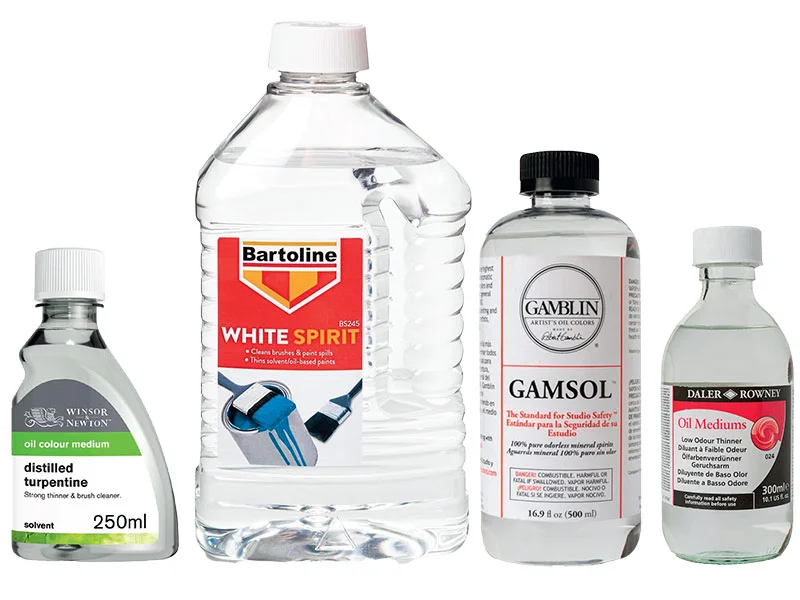
They help artists manipulate the viscosity of paint, allowing for smoother application or faster-drying layers. Common solvents include turpentine, white spirit, and odourless mineral spirits (OMS)—each with its own advantages and risks. The strength of a solvent is referred to as its volatility, with turpentine being the most volatile and odourless mineral spirits being the least.
Choosing the right solvent

1. Turpentine
- Origin: Derived from tree resin
- Strength: High volatility and cleaning power
- Best for: Dissolving traditional resins (e.g., dammar, copal), thinning traditional mediums, removing varnish
- Cautions: Strong fumes; use only in well-ventilated areas. Known by names like distilled turpentine, spirit of turpentine, or oil of turpentine.
2. White Spirit (Mineral Spirits)
- Origin: Petroleum-based
- Best for: General cleaning and thinning
Types:
- Household white spirit: Not suitable for artwork; contains impurities that may damage paintings
- Artist’s white spirit: Refined for studio use
- Cautions: Can cause skin irritation with prolonged contact; use gloves or barrier cream for protection.
3. Odourless Mineral Spirits (OMS)
- Best for: Artists sensitive to fumes; safer indoor use
- Usage: Common for mixing with modern mediums like alkyds
- Note: Not strong enough to dissolve traditional resins
- Eco-friendly options: Brands like Gamsol and Zest-It offer non-toxic, low-odour alternatives
If you're new to oils, don't stop here! Explore our other beginner-friendly guides to learn all you need to progress and develop your oil skills.
Solvents vs mediums
While solvents thin paint and clean tools, mediums are used to alter the texture, finish, and drying time of paint. Solvents are often mixed with oils like linseed to make custom mediums.
- Traditional mediums: Require stronger solvents like turpentine to dissolve resins
- Modern mediums: Work better with refined solvents like OMS
Be careful: Mixing the wrong solvent with a medium (e.g., OMS with a traditional resin) can ruin the mixture, making it cloudy or ineffective.
How to use solvents safely and effectively

Thinning paints
- Use small amounts of solvent to create thin layers (ideal for underpainting)
- Don’t over-thin—excessive solvent weakens the paint film, compromising durability
Cleaning brushes
- Rinse brushes in a jar of solvent immediately after use
- Follow up with soap and warm water to fully clean bristles and remove residue
Mixing mediums
- Combine solvent with oil (e.g., linseed oil) to adjust flow and drying time
- Always mix in small quantities to maintain control over consistency
Solvent-free alternatives
If you want to avoid solvents altogether, consider water-mixable oil paints. These paints offer a similar experience to traditional oils but clean up with water, making them ideal for:
- Artists with chemical sensitivities
- Eco-conscious painters
- Indoor or shared studio spaces

Final tips on using solvents in oil painting
- Always work in a well-ventilated area
- Wear nitrile gloves when handling solvents
- Store solvents in sealed containers away from heat or flame
- Dispose of used solvents responsibly—never pour them down the drain
By understanding the different types of solvents and how to use them properly, you'll not only improve your oil painting process but also create a safer and more efficient studio environment.

Comments
Login or register to add a comment
No comments